Margin for Interior Design.
You used to make it on the markup. Clients price-check on Wayfair now. The hours haven't gone away — only the way you got paid for them.
The interior design pricing problem
Interior design has a pricing model no other vertical shares. You earn a design fee for the specifying work and a markup on the furniture, fixtures, and equipment you procure. The to-the-trade discount used to fund the studio. Direct-to-consumer brands cut into that gap, and clients price-check every selection against Wayfair, Restoration Hardware, and 1stDibs.
The hours behind the work didn't shrink. Showroom visits, site visits, sourcing, sample reviews, vendor management — all real labor. Rarely captured in a flat design fee. Almost never visible in a markup-driven model.
Common pricing challenges
- Markup squeeze. Trade-discount margins shrank as clients price-shop online. The sourcing hours behind the procurement didn't shrink with them.
- Design fees that ignore sourcing. Showroom visits, site visits, vendor management, sample reviews — real hours that rarely make it into a flat design fee.
- Residential vs. contract. The two sides of the studio price differently. One hourly rate or one markup hides which side is profitable.
- The "scope is the room" problem. Clients expand rooms, change palettes, swap pieces. Without a versioned estimate, every change gets absorbed.
Price the design hours on what the work actually costs.
Versioned estimates for selection changes
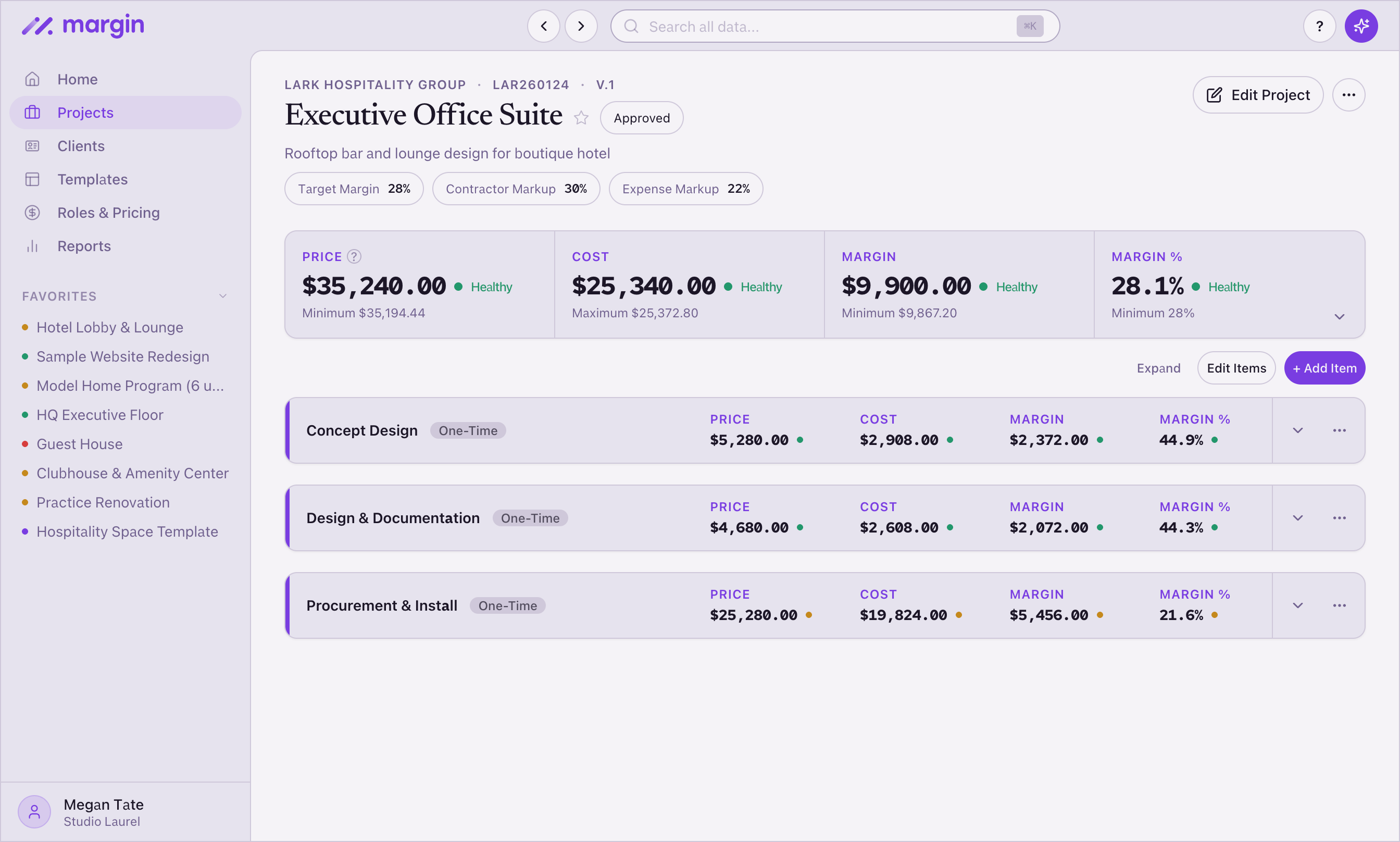
When the client swaps a sofa or expands the dining room, save a new version of the estimate. You see exactly how the change moves the design hours and the procurement margin — before you say yes. "Let's reconsider the bedroom" stops being free.
Residential and contract templates
Build a template for residential with the right design phases and furniture-and-fixtures markup. Build a separate one for contract. New projects start from the right pricing model — not from a blended rate that hides which side funds the other.
Role-level cost on the design hours
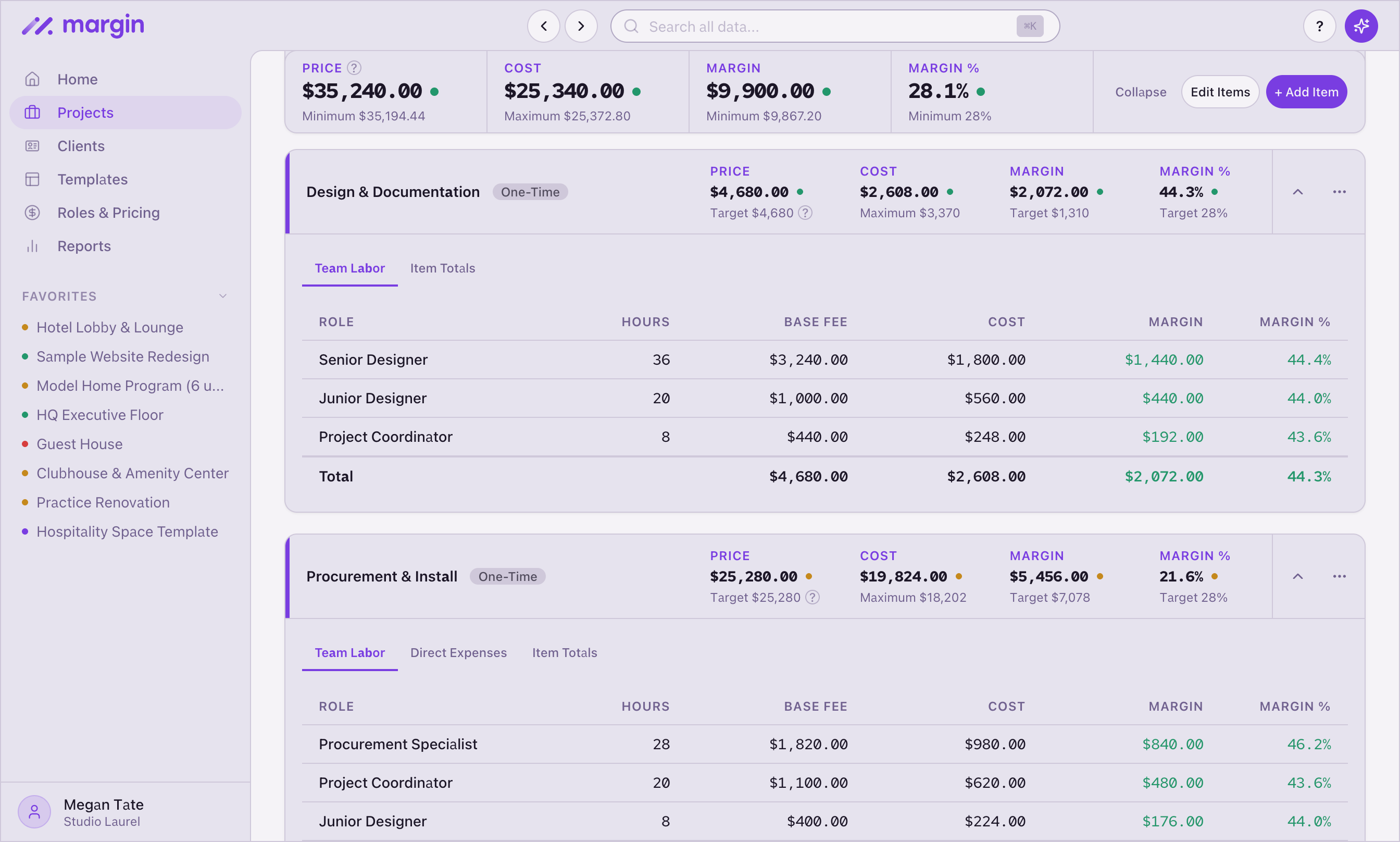
You see the fully loaded cost of every role — principal designer, senior designer, junior designer, design assistant. The sourcing hours that used to disappear into "vibes" become a line item. When a junior runs the site visit and a principal redoes the selection, you see both pulls on the margin.
Expand any project to see every line — design phases, furniture-and-fixtures specifications, sourcing labor, vendor markups — sitting next to its cost and margin contribution.
The hours haven't gone away. Price for them.
See the design and sourcing labor on every project — not just the markup on the goods.
Try Margin free